The Rise of Conservation Biology
Conservation Biology
Class Meetings
Dates: 2026-08-31T16:00:00, 2026-09-09T16:00:00
Contemporary Conservation Biology
Videos or Films Watched
The Canal (Love Canal)

Duration: 00:39:40
Released: 2018
Series: Swindled
Once envisioned as a model community, the neighborhood of Love Canal in Niagara Falls, New York, became the victim of a massive, man-made environmental disaster. Prelude: James Denney, a Missouri farmer, makes a deal for a local chemical company to bury its waste on his property.–––-–—BECOME A VALUEDLISTENER™ Spotify Patreon Apple Podcasts –––-–—CONSUME: Shop.Swindled.com–––-–—MUSIC: Deformr–––-–—FOLLOW: SwindledPodcast.com Instagram TikTok Thanks for listening. :-)
How one scientist took on the chemical industry
TED-Ed, 03 17, 2020
Video (5:22)
Description
Discover the groundbreaking environmental work of Rachel Carson, whose book “Silent Spring” explores how human actions threaten the balance of nature.
–
In 1958, after receiving a letter describing the deaths of songbirds due to the pesticide known as DDT, Rachel Carson began an investigation into the misuse of chemicals and their toll on nature. In 1962, she published her findings in “Silent Spring,” which immediately drew both applause and impassioned dissent. How did this biologist and writer ignite such controversy? Mark Lytle investigates.
Lesson by Mark Lytle, directed by Héloïse Dorsan Rachet.
Animator’s website: https://www.heloisedr.com/ and https://www.instagram.com/helo.dr/?hl=fr
Sign up for our newsletter: http://bit.ly/TEDEdNewsletter
Support us on Patreon: http://bit.ly/TEDEdPatreon
Follow us on Facebook: http://bit.ly/TEDEdFacebook
Find us on Twitter: http://bit.ly/TEDEdTwitter
Peep us on Instagram: http://bit.ly/TEDEdInstagram
View full lesson: https://ed.ted.com/lessons/how-one-scientist-took-on-the-chemical-industry-mark-lytle
Thank you so much to our patrons for your support! Without you this video would not be possible! Angelo Urzua-Milla, Tommy Lewis, leorene, Mahina Bachiller, Marcus Andre Nery, Bruce Vieira Lopes, Chef, Charmaine Hanson, Michael Goldberg, Lydia Pflieger, Paul Aldred-Bann, Manav parmar, Susan Wang, Utkarsh Dubey, Thawsitt, Xuebicoco, Jezabel, Maeve, Kim Humphrey, Kristen Damas, JackKeyton, Matthew D. Vigil, Amin Shahril, Adriano Fontes, Xiao Yu, Fatima Kried, Aravind Battaje, Melissa Suarez, Jason Duncan, Brian A. Dunn, Francisco Amaya, Daisuke Goto, Matt Switzler, Chhunheng Veng, Leonardo Monrroy, Sumedh Ghaisas, Guhten, Amer Harb, Dowey Baothman, Norbert Orgován, Shafeeq Ansari, Gabriel Balsa, Maryam Sultan, Bethany Connor, Jeremy Shimanek, Adam Foreman, Sebastiaan Vleugels, Lâm Nguyễn, Mark Byers and Bradley Heinold.
Transcript
Intro
0:06 · In 1958, Rachel Carson received a letter describing songbirds suddenly dropping from tree branches.
0:13 · The writer blamed their deaths on a pesticide called DDT that exterminators had sprayed on a nearby marsh.
0:19 · The letter was the push Carson needed to investigate DDT.
0:23 · She had already heard from scientists and conservationists who were worried that rampant use of the pesticide posed a threat to fish, birds, and possibly humans.
0:33 · She began to make inquiries through government contacts from her years working in the United States Bureau of Fisheries.
0:40 · She asked: “what has already silenced the voices of spring?”
Silent Spring
0:45 · In 1962, Carson published her findings in “Silent Spring.”
0:50 · Her book documented the misuse of chemicals and their toll on nature and human health.
0:56 · “Silent Spring” immediately drew both applause and impassioned dissent— along with vicious personal attacks on the author.
1:04 · How did this mild-mannered biologist and writer ignite such controversy?
1:10 · Carson began her career as a hardworking graduate student, balancing her studies in biology at John Hopkins University with part time jobs.
1:18 · Still, she had to leave school before completing her doctorate to provide for her ailing father and sister.
1:25 · Carson found part time work with the Bureau of Fisheries writing for a radio program on marine biology.
1:31 · Her ability to write materials that could hold the general public’s attention impressed her superiors, and in 1936, she became the second woman to be hired at the Bureau full time.
1:43 · In 1941, she published the first of three books on the ocean, combining science with lyrical meditations on underwater worlds.
1:52 · These explorations resonated with a wide audience.
1:56 · In “Silent Spring,” Carson turned her attention to the ways human actions threaten the balance of nature.
2:03 · DDT was originally used during World War II to shield crops from insects and protect soldiers from insect-borne diseases.
2:12 · After the war, it was routinely sprayed in wide swaths to fight pests, often with unforeseen results.
2:19 · One attempt to eradicate fire ants in the southern U.S.
2:22 · killed wildlife indiscriminately, but did little to eliminate the ants.
DDT
2:29 · In spite of this and other mishaps, the US Department of Agriculture and chemical companies extolled the benefits of DDT.
2:37 · There was little regulation or public awareness about its potential harm.
2:41 · But Carson showed how the overuse of chemicals led to the evolution of resistant species— which, in turn, encouraged the development of deadlier chemicals.
2:51 · Since DDT does not dissolve in water, she asserted that over time it would accumulate in the environment, the bodies of insects, the tissues of animals who consume those insects, and eventually humans.
3:04 · She suggested that exposure to DDT might alter the structure of genes, with unknown consequences for future generations.
3:13 · The response to “Silent Spring” was explosive.
3:17 · For many people the book was a call to regulate substances capable of catastrophic harm.
3:22 · Others objected that Carson hadn’t mentioned DDT’s role controlling the threat insects posed to human health.
3:30 · Former Secretary of Agriculture Ezra Taft Benson demanded to know “why a spinster with no children was so concerned about genetics?”
3:40 · and dismissed Carson as “probably a Communist.”
3:44 · A lawyer for a pesticide manufacturer alluded to Carson and her supporters as “sinister influences” aiming to paint businesses as “immoral.”
3:55 · In reality, Carson had focused on the dangers of chemicals because they weren’t widely understood, while the merits were well publicized.
4:03 · She rejected the prevailing belief that humans should and could control nature.
4:08 · Instead, she challenged people to cultivate “maturity and mastery, not of nature, but of ourselves.”
Environmentalists
4:16 · Carson died of cancer in 1964, only two years after the publication of “Silent Spring.”
4:23 · Her work galvanized a generation of environmental activists.
4:28 · In 1969, under pressure from environmentalists, Congress passed the National Environmental Policy Act that required federal agencies to evaluate environmental impacts of their actions.
4:41 · To enforce the act, President Richard Nixon created the Environmental Protection Agency.
4:47 · And in 1972, the EPA issued a partial ban on the use of DDT.
4:53 · Long after her death, Rachel Carson continued to advocate for nature through the lingering impact of her writing.
The Cuyahoga River Fire Don’t Fall in the River
CSU Digital Humanities, 08 06, 2010
Video (1:23)
Description
Tim Donovan recalls working on the Cuyahoga River the day that it caught fire in 1969.
To learn more about the Cuyahoga River fire, visit:
http://clevelandhistorical.org/items/show/63
To download the Cleveland Historical smart phone app, go to:
http://app.clevelandhistorical.org/
Transcript
0:08 · and we all know about the river fire of 69 and as as somebody who’s interested in the history of Cleveland and kyoga River I know that wasn’t the best fire you know I know there was other fires that could have burned down Cleveland had not the wind shifted to from the north I remember a 52 fire I think that
0:25 · was uh I think that one probably would have won the prize for the best fire I was actually working the day that the river caught on fire actually working as a hatch tender on the ships so it’s kind of unusual when somebody would yell fire and tell you to run away from the river cu the river is generally water but when you were working down on the river at that time the river was like a cauldron it would just Bubble Up oxygen trying to get out of the river it had a coat of oil on it and you’d see
0:52 · rats float down the river the size of dogs bloated from whatever it was that they ingested and there was a rule that if you fell in the river you immediately went to the emergency room in the hospital so the idea that the idea here was don’t fall in the river
Earth Day 1970
Earth Day 1970 Part 13 Conclusion CBS News with Walter Cronkite
Pacific Education Institute, 10 26, 2016
Video (2:39)
Description
Uploaded on Apr 11, 2010
http://earthweek1970.org - Original broadcast of CBS News Special Report with Walter Cronkite about the first Earth Day, 1970. Also known as Earth Week 1970.
This video is used with permission for educational purposes only. This video is the property of EarthWeek 1970. Copyright © EarthWeek 1970.
Transcript
0:01 · The hoopla of Earth Day is over. The problems remain. Only time will tell if these demonstrations accomplished anything. But let’s summarize the points that were brought home today to a lot of people who have missed the point so far.
0:15 · For instance, the militants who see all this as an establishment trick to divert attention from what to them are more urgent concerns like civil rights or like Vietnam. They seem to have missed the point that there are no civil rights or peace in a lifeless world. For instance, the politicians who see this as a safe crusade, they seem to have missed the point that it will involve treading on more special interests than ever in our history. For the first time, they may even have to come out against motherhood.
0:44 · For instance, those in industry who see the crisis as only the hysterical creation of dogooders, they’ve missed the point if they haven’t heard the unanimous voice of the scientists warning that halfway measures and business as usual cannot possibly pull us back from the edge of the precipice. For instance, the too silent majority. The greatest disappointment today was the degree of nonparticipation across the country and especially the absence of adults.
1:10 · And the young people who did participate were in a skyllock mood which contrasted rudely with the messages of apocalypse. Those who ignored Earth Day, well that’s one thing. Those who ignore the crisis of our planet, that’s quite another. The indifferent have missed the point that to clean up the air and earth and water in the few years science says is left to us means personal involvement and may mean personal sacrifice the likes of which Americans have never been asked to make in time of peace.
1:40 · A sense of today’s teaching was that America must undertake a revolution in its way of life. Affluent America will, we were told, almost certainly have to scale down its standards of living, give up having as many cars, as many children, as many cans, as many conveniences, as much conspicuous consumption. Someday, we heard today, the world will be a better place if it listens and acts.
2:06 · But in the meantime, perhaps for a generation or more, it will be frighteningly costly to each of us to clean up the mess each of us has made.
2:18 · But the cost of not doing so is more frightening. That’s what today’s message really means. And those who marched today and those who slept and those who scorned are in this thing together. What is at stake and what is in question is survival. This is water crime guide.
2:37 · Good night.
World Weather Attribution — understanding climate change and extreme weather
World Weather Attribution, 11 13, 2023
Video (5:59)
Description
When an extreme weather event occurs, people often ask: is climate change to blame?
For decades, climate scientists have answered that question in general terms – that as the planet warms, we can expect many of these weather events to become more frequent and extreme.
But in recent years, advances in attribution science have allowed researchers to answer the question in much greater detail.
Founded in 2015 by Dr. Friederike Otto and Dr. Geert Jan van Oldenborgh, World Weather Attribution scientists quantify how climate change influences the intensity and likelihood of an extreme weather event. They often do this using weather data and computer modelling, and often immediately in the aftermath of the extreme event.
To encourage actions that will make communities and countries more resilient to future extreme weather events, World Weather Attribution studies also evaluate how existing vulnerability worsened the impacts of the extreme weather event.
To learn more about World Weather Attribution or to view our studies, go to https://www.worldweatherattribution.org/
Follow us on Twitter: https://twitter.com/WWAttribution
Film produced by Geoff Marsh.
Transcript
Introduction to attribution
0:03 · [Music] in the immediate aftermath of an extreme weather event occurring people always ask the question is climate change to blame we found it World weather attribution to answer that question based on scientific evidence this one does not include the EV weather attribution is a relatively
0:26 · new field of science that basically brings together weather obervation and meteorology and climate science and really answers the question what is the cause of an event happening I’m Dr Freddy Oto I’m a senior lecturer at the Grandam Institute at Imperial College London and I am co-founder of the world weather attribution initiative which I’m also leading our burning of fossil fuels for
Climate change impacts
0:56 · um the last decades and Century has led to the world over all getting warmer and that had a profound effect on weather around the world so every heat wave that is happening today has been made more likely more intense and longer because
1:12 · of climate change but we also see changes in other weather events heavy rainfall has become more intense in many parts of the world we see more intense droughts or at least the impacts of droughts on agriculture are worse as they would have been without climate change because of the increase in temperature and of course that doesn’t affect just the weather but our societies are only adapted to a very
1:39 · small range of possible weather and we are outside this range now and therefore the impacts that these changes have are that people lose their lives their livelihoods across the world not just in the global South but everywhere in the
1:58 · world so the kind of extreme weather events that we would want to St study with World weather attribution are very frequent so um we meet every Monday with our team and look at the events that have happened and there are many more events happening than we can study and we are aiming to look at about 20 uh per
Case studies and examples
2:22 · year so the kind of thing we are looking at are events like for example the Pacific Northwest Heatwave that hit the US in Canada in 2021 where we found this event would have basically been impossible without climate change another event that has not been talked about much in the global media was extreme flooding in Nigeria and around the Nija Delta more widely that happened in 2022 where we also found that climate
2:48 · change made this event 80 times more likely which is a huge change for a rainfall event so with our core team we decide whether we can do a study based Bas on whether we have enough manpower available whether we have data and
The research process
3:05 · climate models at least in principle that are able to simulate the type of event whether we have the ability to make contact with people in the region and also we try um to look at is it a kind of event in a region where we have already done many many studies if yes we might give that a lower priority but if it’s in a region where not many Studies have been done we will definitely try to do it so once we have made contact with the
3:34 · people in country we decide on how to define the event and then based on how complex the weather event is that led to the impacts we then decide on the timeline so if it’s a heat wve that is relatively straightforward or a heavy rainfall event we try and finish the study within a week if it’s something more complex like a drought um or
4:00 · maybe a a less straightforward rainfall event than it might take us a few weeks but we we really aim to be as fast as possible so that our evidence can still feed into the public discussion that is happening about the event so what we are aiming to do with each of these studies is to provide on
Reporting and implications
4:24 · the one hand an answer of what’s the role of climate change so something like this event has been made 80 times more likely because of climate change and on the other hand information on who has been most affected and why so who is hit
4:41 · by this weather event and why and how are they affected and also what can be done to prevent these people being affected next time so once we finish a study we obviously can’t send it to peer review and wait for 2 years until the review process is over before publicizing the events we publicize them straight away so we publish a scientific report that has all the information that a scientific paper has on our website we write a summary we write a press release
5:12 · and we do a press briefing and in many cases we then send the scientific report a few weeks after to peerreview um so that it will become a peer-reviewed paper down the line it’s important to have attribution studies because these studies show us how climate change manifests in our daily lives in our
5:35 · daily experiences not just climate scientists but everyone and also because we have an assessment on the vulnerability we can learn from these studies how to better prevent impacts to be not as dramatic for future [Music] events
Assigned Background
Conservation biology - past and present
Chapter: Conservation biology: past and present 1
Ch No.: 1 (Foundations of Conservation Biology)
Pages: 7-26 (The Rise of Conservation Biology)
PDF: Conservation biology - past and present.pdf
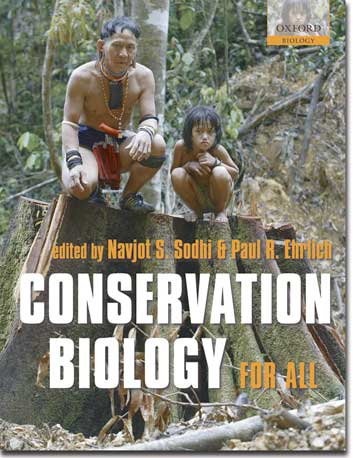
Textbook: Conservation Biology for All (see details below)
Days Covered: BIOL4120_W2D1
Text: Conservation Biology for All by Curt Meine
Edition: (2010)
ISBN: 978-0-19-955423-2
Optional Material (Dive Deeper)
Podcasts
The Canal (Love Canal)
Duration: 00:39:40
Released: 2018
Series: Swindled
Once envisioned as a model community, the neighborhood of Love Canal in Niagara Falls, New York, became the victim of a massive, man-made environmental disaster. Prelude: James Denney, a Missouri farmer, makes a deal for a local chemical company to bury its waste on his property.–––-–—BECOME A VALUEDLISTENER™ Spotify Patreon Apple Podcasts –––-–—CONSUME: Shop.Swindled.com–––-–—MUSIC: Deformr–––-–—FOLLOW: SwindledPodcast.com Instagram TikTok Thanks for listening. :-)
Readings
Ch 2 The Rise of Conservation Biology
Textbook: Conservation Biology (see details below)
Chapter: 2 (Foundations of Conservation Biology)
Sections Assigned: 2.2 (The Rise of Conservation Biology)
Days Covered: BIOL4120_W2D1
Text: Conservation Biology by
Edition: 2nd (2025-01-17)
ISBN: 9780197667033 (textbook)

Conservation biology - past and present
Chapter: Conservation biology: past and present 1
Ch No.: 1 (Foundations of Conservation Biology)
Pages: 7-26 (The Rise of Conservation Biology)
PDF: Conservation biology - past and present.pdf
Textbook: Conservation Biology for All (see details below)
Days Covered: BIOL4120_W2D1
Text: Conservation Biology for All by Curt Meine
Edition: (2010)
ISBN: 978-0-19-955423-2
Video Clips
Earth Day 1970
Earth Day 1970 Part 13 Conclusion CBS News with Walter Cronkite
Pacific Education Institute, 10 26, 2016
Video (2:39)
Description
Uploaded on Apr 11, 2010
http://earthweek1970.org - Original broadcast of CBS News Special Report with Walter Cronkite about the first Earth Day, 1970. Also known as Earth Week 1970.
This video is used with permission for educational purposes only. This video is the property of EarthWeek 1970. Copyright © EarthWeek 1970.
Transcript
0:01 · The hoopla of Earth Day is over. The problems remain. Only time will tell if these demonstrations accomplished anything. But let’s summarize the points that were brought home today to a lot of people who have missed the point so far.
0:15 · For instance, the militants who see all this as an establishment trick to divert attention from what to them are more urgent concerns like civil rights or like Vietnam. They seem to have missed the point that there are no civil rights or peace in a lifeless world. For instance, the politicians who see this as a safe crusade, they seem to have missed the point that it will involve treading on more special interests than ever in our history. For the first time, they may even have to come out against motherhood.
0:44 · For instance, those in industry who see the crisis as only the hysterical creation of dogooders, they’ve missed the point if they haven’t heard the unanimous voice of the scientists warning that halfway measures and business as usual cannot possibly pull us back from the edge of the precipice. For instance, the too silent majority. The greatest disappointment today was the degree of nonparticipation across the country and especially the absence of adults.
1:10 · And the young people who did participate were in a skyllock mood which contrasted rudely with the messages of apocalypse. Those who ignored Earth Day, well that’s one thing. Those who ignore the crisis of our planet, that’s quite another. The indifferent have missed the point that to clean up the air and earth and water in the few years science says is left to us means personal involvement and may mean personal sacrifice the likes of which Americans have never been asked to make in time of peace.
1:40 · A sense of today’s teaching was that America must undertake a revolution in its way of life. Affluent America will, we were told, almost certainly have to scale down its standards of living, give up having as many cars, as many children, as many cans, as many conveniences, as much conspicuous consumption. Someday, we heard today, the world will be a better place if it listens and acts.
2:06 · But in the meantime, perhaps for a generation or more, it will be frighteningly costly to each of us to clean up the mess each of us has made.
2:18 · But the cost of not doing so is more frightening. That’s what today’s message really means. And those who marched today and those who slept and those who scorned are in this thing together. What is at stake and what is in question is survival. This is water crime guide.
2:37 · Good night.
How one scientist took on the chemical industry
TED-Ed, 03 17, 2020
Video (5:22)
Description
Discover the groundbreaking environmental work of Rachel Carson, whose book “Silent Spring” explores how human actions threaten the balance of nature.
–
In 1958, after receiving a letter describing the deaths of songbirds due to the pesticide known as DDT, Rachel Carson began an investigation into the misuse of chemicals and their toll on nature. In 1962, she published her findings in “Silent Spring,” which immediately drew both applause and impassioned dissent. How did this biologist and writer ignite such controversy? Mark Lytle investigates.
Lesson by Mark Lytle, directed by Héloïse Dorsan Rachet.
Animator’s website: https://www.heloisedr.com/ and https://www.instagram.com/helo.dr/?hl=fr
Sign up for our newsletter: http://bit.ly/TEDEdNewsletter
Support us on Patreon: http://bit.ly/TEDEdPatreon
Follow us on Facebook: http://bit.ly/TEDEdFacebook
Find us on Twitter: http://bit.ly/TEDEdTwitter
Peep us on Instagram: http://bit.ly/TEDEdInstagram
View full lesson: https://ed.ted.com/lessons/how-one-scientist-took-on-the-chemical-industry-mark-lytle
Thank you so much to our patrons for your support! Without you this video would not be possible! Angelo Urzua-Milla, Tommy Lewis, leorene, Mahina Bachiller, Marcus Andre Nery, Bruce Vieira Lopes, Chef, Charmaine Hanson, Michael Goldberg, Lydia Pflieger, Paul Aldred-Bann, Manav parmar, Susan Wang, Utkarsh Dubey, Thawsitt, Xuebicoco, Jezabel, Maeve, Kim Humphrey, Kristen Damas, JackKeyton, Matthew D. Vigil, Amin Shahril, Adriano Fontes, Xiao Yu, Fatima Kried, Aravind Battaje, Melissa Suarez, Jason Duncan, Brian A. Dunn, Francisco Amaya, Daisuke Goto, Matt Switzler, Chhunheng Veng, Leonardo Monrroy, Sumedh Ghaisas, Guhten, Amer Harb, Dowey Baothman, Norbert Orgován, Shafeeq Ansari, Gabriel Balsa, Maryam Sultan, Bethany Connor, Jeremy Shimanek, Adam Foreman, Sebastiaan Vleugels, Lâm Nguyễn, Mark Byers and Bradley Heinold.
Transcript
Intro
0:06 · In 1958, Rachel Carson received a letter describing songbirds suddenly dropping from tree branches.
0:13 · The writer blamed their deaths on a pesticide called DDT that exterminators had sprayed on a nearby marsh.
0:19 · The letter was the push Carson needed to investigate DDT.
0:23 · She had already heard from scientists and conservationists who were worried that rampant use of the pesticide posed a threat to fish, birds, and possibly humans.
0:33 · She began to make inquiries through government contacts from her years working in the United States Bureau of Fisheries.
0:40 · She asked: “what has already silenced the voices of spring?”
Silent Spring
0:45 · In 1962, Carson published her findings in “Silent Spring.”
0:50 · Her book documented the misuse of chemicals and their toll on nature and human health.
0:56 · “Silent Spring” immediately drew both applause and impassioned dissent— along with vicious personal attacks on the author.
1:04 · How did this mild-mannered biologist and writer ignite such controversy?
1:10 · Carson began her career as a hardworking graduate student, balancing her studies in biology at John Hopkins University with part time jobs.
1:18 · Still, she had to leave school before completing her doctorate to provide for her ailing father and sister.
1:25 · Carson found part time work with the Bureau of Fisheries writing for a radio program on marine biology.
1:31 · Her ability to write materials that could hold the general public’s attention impressed her superiors, and in 1936, she became the second woman to be hired at the Bureau full time.
1:43 · In 1941, she published the first of three books on the ocean, combining science with lyrical meditations on underwater worlds.
1:52 · These explorations resonated with a wide audience.
1:56 · In “Silent Spring,” Carson turned her attention to the ways human actions threaten the balance of nature.
2:03 · DDT was originally used during World War II to shield crops from insects and protect soldiers from insect-borne diseases.
2:12 · After the war, it was routinely sprayed in wide swaths to fight pests, often with unforeseen results.
2:19 · One attempt to eradicate fire ants in the southern U.S.
2:22 · killed wildlife indiscriminately, but did little to eliminate the ants.
DDT
2:29 · In spite of this and other mishaps, the US Department of Agriculture and chemical companies extolled the benefits of DDT.
2:37 · There was little regulation or public awareness about its potential harm.
2:41 · But Carson showed how the overuse of chemicals led to the evolution of resistant species— which, in turn, encouraged the development of deadlier chemicals.
2:51 · Since DDT does not dissolve in water, she asserted that over time it would accumulate in the environment, the bodies of insects, the tissues of animals who consume those insects, and eventually humans.
3:04 · She suggested that exposure to DDT might alter the structure of genes, with unknown consequences for future generations.
3:13 · The response to “Silent Spring” was explosive.
3:17 · For many people the book was a call to regulate substances capable of catastrophic harm.
3:22 · Others objected that Carson hadn’t mentioned DDT’s role controlling the threat insects posed to human health.
3:30 · Former Secretary of Agriculture Ezra Taft Benson demanded to know “why a spinster with no children was so concerned about genetics?”
3:40 · and dismissed Carson as “probably a Communist.”
3:44 · A lawyer for a pesticide manufacturer alluded to Carson and her supporters as “sinister influences” aiming to paint businesses as “immoral.”
3:55 · In reality, Carson had focused on the dangers of chemicals because they weren’t widely understood, while the merits were well publicized.
4:03 · She rejected the prevailing belief that humans should and could control nature.
4:08 · Instead, she challenged people to cultivate “maturity and mastery, not of nature, but of ourselves.”
Environmentalists
4:16 · Carson died of cancer in 1964, only two years after the publication of “Silent Spring.”
4:23 · Her work galvanized a generation of environmental activists.
4:28 · In 1969, under pressure from environmentalists, Congress passed the National Environmental Policy Act that required federal agencies to evaluate environmental impacts of their actions.
4:41 · To enforce the act, President Richard Nixon created the Environmental Protection Agency.
4:47 · And in 1972, the EPA issued a partial ban on the use of DDT.
4:53 · Long after her death, Rachel Carson continued to advocate for nature through the lingering impact of her writing.
The Cuyahoga River Fire Don’t Fall in the River
CSU Digital Humanities, 08 06, 2010
Video (1:23)
Description
Tim Donovan recalls working on the Cuyahoga River the day that it caught fire in 1969.
To learn more about the Cuyahoga River fire, visit:
http://clevelandhistorical.org/items/show/63
To download the Cleveland Historical smart phone app, go to:
http://app.clevelandhistorical.org/
Transcript
0:08 · and we all know about the river fire of 69 and as as somebody who’s interested in the history of Cleveland and kyoga River I know that wasn’t the best fire you know I know there was other fires that could have burned down Cleveland had not the wind shifted to from the north I remember a 52 fire I think that
0:25 · was uh I think that one probably would have won the prize for the best fire I was actually working the day that the river caught on fire actually working as a hatch tender on the ships so it’s kind of unusual when somebody would yell fire and tell you to run away from the river cu the river is generally water but when you were working down on the river at that time the river was like a cauldron it would just Bubble Up oxygen trying to get out of the river it had a coat of oil on it and you’d see
0:52 · rats float down the river the size of dogs bloated from whatever it was that they ingested and there was a rule that if you fell in the river you immediately went to the emergency room in the hospital so the idea that the idea here was don’t fall in the river
This Is Martha, the World’s Last-Known Passenger Pigeon
Smithsonian Channel, 05 27, 2016
Video (2:48)
Description
Smithsonian’s National Museum of Natural History houses one of largest bird collections in the world. One of their most prized birds, Martha, was the last passenger pigeon to ever fly.
From: SERIOUSLY AMAZING OBJECTS: Trailblazers
http://bit.ly/1XCulD1
Transcript
0:00 · Hi. Hi. I’m Chris. Lucia. Nice to meet you.
0:05 · Welcome to the Division of Birds.
0:06 · Thanks. The Smithsonian has one of the largest collections in the world, open to scientists from all over. Anyone who wants to come and study birds. They can either come here and work with us or we can loan the specimens to them.
0:22 · One specimen stands out above the rest.
0:26 · What are you going to see today? Oh my god. You’re kidding me. That’s Martha.
Where is Martha the passenger pigeon?
0:28 · This is Martha. For a pigeon fan like Lucia, this is like seeing a movie star, the very last passenger pigeon. She died in the Cincinnati Zoo at 100 p.m. on the 1st of September, 1914. She was literally alone for about 4 years before she died. And and we knew at that time that there were no other ones in the wild. So this is one of the rare cases when you can actually place an exact time and date on an extinction.
0:59 · Today, Martha sits for posterity beside her companion, appropriately named George, a fellow passenger pigeon who died long before her.
1:10 · Hundreds of years ago, passenger pigeons were estimated to be about a quarter of the total bird population of the United States. A flock a mile wide, flying 60 m an hour, could take days to pass overhead. So where did they go? The story really is not a simple one. There are there are a lot of factors involved with any extinction. In this case, there was a lot of market hunting.
1:36 · They were easy targets because they occurred in these large flocks of over a billion birds. A hunter could go and collect thousands at a time without, you know, really having to try that hard.
1:48 · Passenger pigeons became a staple of the American diet. By the end of the 1800s, millions were being shipped back to cities in the east. Another natural factor sealed their fate. They didn’t lay as many eggs as other pigeons, so it was easier to wipe them out that way, right? Yeah. The the biology of the passenger pigeon was such that they really relied on those large flocks for a couple of reasons. One was protection from predators. you know, there’s safety in numbers and they didn’t have to lay a whole bunch of eggs to reproduce.
2:18 · So, in a matter of just a few decades, we’re just all gone.
2:24 · Once a species is gone, no amount of wishful thinking can bring it back.
2:31 · Birds still go extinct, but the loss of the passenger pigeon made people take notice. It prompted the very first legal protections for migratory birds.
2:42 · [Music]
World Weather Attribution — understanding climate change and extreme weather
World Weather Attribution, 11 13, 2023
Video (5:59)
Description
When an extreme weather event occurs, people often ask: is climate change to blame?
For decades, climate scientists have answered that question in general terms – that as the planet warms, we can expect many of these weather events to become more frequent and extreme.
But in recent years, advances in attribution science have allowed researchers to answer the question in much greater detail.
Founded in 2015 by Dr. Friederike Otto and Dr. Geert Jan van Oldenborgh, World Weather Attribution scientists quantify how climate change influences the intensity and likelihood of an extreme weather event. They often do this using weather data and computer modelling, and often immediately in the aftermath of the extreme event.
To encourage actions that will make communities and countries more resilient to future extreme weather events, World Weather Attribution studies also evaluate how existing vulnerability worsened the impacts of the extreme weather event.
To learn more about World Weather Attribution or to view our studies, go to https://www.worldweatherattribution.org/
Follow us on Twitter: https://twitter.com/WWAttribution
Film produced by Geoff Marsh.
Transcript
Introduction to attribution
0:03 · [Music] in the immediate aftermath of an extreme weather event occurring people always ask the question is climate change to blame we found it World weather attribution to answer that question based on scientific evidence this one does not include the EV weather attribution is a relatively
0:26 · new field of science that basically brings together weather obervation and meteorology and climate science and really answers the question what is the cause of an event happening I’m Dr Freddy Oto I’m a senior lecturer at the Grandam Institute at Imperial College London and I am co-founder of the world weather attribution initiative which I’m also leading our burning of fossil fuels for
Climate change impacts
0:56 · um the last decades and Century has led to the world over all getting warmer and that had a profound effect on weather around the world so every heat wave that is happening today has been made more likely more intense and longer because
1:12 · of climate change but we also see changes in other weather events heavy rainfall has become more intense in many parts of the world we see more intense droughts or at least the impacts of droughts on agriculture are worse as they would have been without climate change because of the increase in temperature and of course that doesn’t affect just the weather but our societies are only adapted to a very
1:39 · small range of possible weather and we are outside this range now and therefore the impacts that these changes have are that people lose their lives their livelihoods across the world not just in the global South but everywhere in the
1:58 · world so the kind of extreme weather events that we would want to St study with World weather attribution are very frequent so um we meet every Monday with our team and look at the events that have happened and there are many more events happening than we can study and we are aiming to look at about 20 uh per
Case studies and examples
2:22 · year so the kind of thing we are looking at are events like for example the Pacific Northwest Heatwave that hit the US in Canada in 2021 where we found this event would have basically been impossible without climate change another event that has not been talked about much in the global media was extreme flooding in Nigeria and around the Nija Delta more widely that happened in 2022 where we also found that climate
2:48 · change made this event 80 times more likely which is a huge change for a rainfall event so with our core team we decide whether we can do a study based Bas on whether we have enough manpower available whether we have data and
The research process
3:05 · climate models at least in principle that are able to simulate the type of event whether we have the ability to make contact with people in the region and also we try um to look at is it a kind of event in a region where we have already done many many studies if yes we might give that a lower priority but if it’s in a region where not many Studies have been done we will definitely try to do it so once we have made contact with the
3:34 · people in country we decide on how to define the event and then based on how complex the weather event is that led to the impacts we then decide on the timeline so if it’s a heat wve that is relatively straightforward or a heavy rainfall event we try and finish the study within a week if it’s something more complex like a drought um or
4:00 · maybe a a less straightforward rainfall event than it might take us a few weeks but we we really aim to be as fast as possible so that our evidence can still feed into the public discussion that is happening about the event so what we are aiming to do with each of these studies is to provide on
Reporting and implications
4:24 · the one hand an answer of what’s the role of climate change so something like this event has been made 80 times more likely because of climate change and on the other hand information on who has been most affected and why so who is hit
4:41 · by this weather event and why and how are they affected and also what can be done to prevent these people being affected next time so once we finish a study we obviously can’t send it to peer review and wait for 2 years until the review process is over before publicizing the events we publicize them straight away so we publish a scientific report that has all the information that a scientific paper has on our website we write a summary we write a press release
5:12 · and we do a press briefing and in many cases we then send the scientific report a few weeks after to peerreview um so that it will become a peer-reviewed paper down the line it’s important to have attribution studies because these studies show us how climate change manifests in our daily lives in our
5:35 · daily experiences not just climate scientists but everyone and also because we have an assessment on the vulnerability we can learn from these studies how to better prevent impacts to be not as dramatic for future [Music] events
Films
Rebuilding The Herd Rewilding The Future
Episode 8/13/2026 of Conservation Works (Season 2026) - Released: 2026-08-13 - Duration: 00:27:27
Description
Explore Nebraska’s bighorn sheep comeback, Zoo Schools’ Earth Day event, the beauty of Scotts Bluff.
Transcript
- textbook Conservation biology - past and present
- slide Contemporary Conservation Biology
- video Earth Day 1970
- video How one scientist took on the chemical industry
- video The Canal (Love Canal)
- video The Cuyahoga River Fire Don't Fall in the River
- video World Weather Attribution — understanding climate change and extreme weather